
SERVICES
PEST CONTROL
WHY DO I NEED
this service?
Residential, Commercial and HACCP Grade Pest Control.
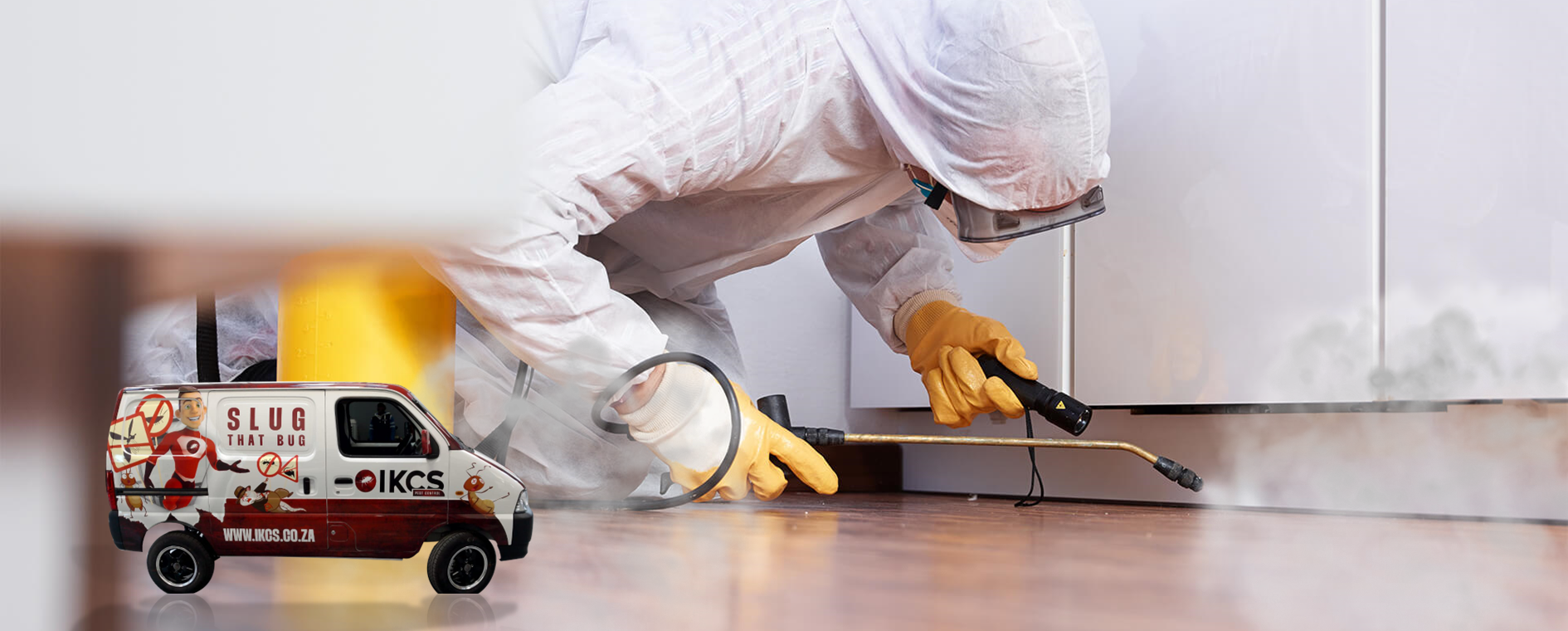
Over many years of specialising in kitchen deep cleaning, we have gained a detailed and deep understanding of the pests that put your business and home at risk. IKCS Pest Control Division services the industrial, commercial and domestic sectors, and specialises in the prevention and control of all health and nuisance pests, including but not limited to ants, cockroaches, rodents, flying insects and biting insects. Our services are Guaranteed and we protect your brand reputation.
Our services include:
- General Pest Control and Pest Eradication
- HACCP regulation Pest Control
- Preventative Treatments
- Fumigation Services
- Termite treatment and soil poisoning
- Pest Control Maintenance Services
- Bird Proofing
- Bee Removal
Sectors that we treat:
- Residential
- Standalone Houses
- Complexes
- Estates
- Residential and Complex Gardens
Commercial:
- Industrial Premises
- Hotels
- Restaurants and Bars
- Food Manufacturers
- Packaging Manufacturers
- Logistics Sector
- Dairy and Bakery industry
- Pharmaceutical Industry
- Schools
- Government buildings
- Offices
- Hospitals and other healthcare facilities
- Other economic sectors
Terms and Conditions
General Terms and Conditions for Services Rendered:
- To ensure all pest control services are carried out in accordance to industry regulations and industry standards concentrating on the safety of the client, consumers, employees and the environment.
- To always be responsible and professional.
- To honour all guarantees.
HEALTH vs
NUISANCE PESTS?
Here are the key differences between health pests and nuisance pests for pest control, along with some examples:
Health pests:
- Directly affect human health and transmit disease.
- Example pests include cockroaches, mice, rats, mosquitoes, ticks, fleas, flies.
Nuisance pests:
- Do not directly impact human health but are bothersome.
- Mostly cause annoyance, discomfort, or inconvenience.
- Example pests include spiders, ants, moths, centipedes, crickets.
Some more details:
Health pests carry and spread germs that can cause illness in humans through, droppings, or contamination of food. Cockroaches can transmit bacteria like Salmonella. Rats and mice are linked to diseases like Hantavirus and Leptospirosis. Mosquitoes spread West Nile, Zika, and Malaria.
Spiders, ants, and moths don’t impact health but can infest homes and be difficult to control.
For pest control professionals, health pests require immediate action as they pose serious health risks if left unchecked. Nuisance pests have lower priority but still need to be managed as they negatively affect quality of life and should be prevented from becoming more severe.
HACCP
PEST CONTROL?
Here are some of the key reasons why HACCP pest control is important:
- Food safety – Rodents and insects can spread dangerous bacteria like Salmonella and E. coli that contaminate foods. Effective pest control is critical to comply with food safety regulations that protect public health.
- Prevent product contamination – Pests can leave droppings, hairs, and other residues that get into food ingredients and products, making them unfit for consumption. Professional pest management prevents this.
- Avoid facility shutdowns – If a major infestation is discovered, facilities may be closed down until the issue is resolved, resulting in large losses of product and revenue. Preventative treatments help avert shutdowns.
- Improve inspection scores – Routine, documented pest control makes inspections/audits easier to pass. Lack of proper pest management leads to violations, non-conformances and low scores.
- Protect brand reputation – Media coverage of pest-related plant closures causes expensive damage to brand names. Consistent pest management preserves a company’s good public image.
- Meet legal obligations – There are laws and regulations like the Foodstuffs, Cosmetics and Disinfectants Act that mandate pest control for food facilities. Documented efforts demonstrate due diligence.
- Prevent litigation – In case of any consumer illness or regulatory action, companies who follow pest control best practices are better protected against litigation.
- Access to markets – Proper pest control is often needed to qualify for certain certifications and gain access to supply chains. Lacking pest management can cut off important markets.
Lawful obligations relating to Pest Control include:
- Foodstuffs, Cosmetics and Disinfectants Act 54 of 1972
- Occupational Safety Act
- Prerequisite Programmes to allow your business to comply with HACCP (PRP’s)
- SANS 10049:2012 (Food safety management requirements for prerequisite programmes)
- SANS 10133:1997 (The application of pesticides in food environments)
In summary, HACCP pest control is a necessary, preventative measure for food safety and operational excellence. A comprehensive integrated pest management program protects products, people and brand reputations.
Member of South African Pest Control Association (SAPCA) – IKC480
TYPES OF
PESTS
Rodents
Here are some reasons why pest control is important for controlling rodents:
· Rodent infestations can spread diseases. Rodents can carry harmful diseases like hantavirus, leptospirosis, and salmonellosis that can infect humans. Getting rid of rodents through pest control helps eliminate the risk of these illnesses spreading.
· Rodents destroy property and contaminate food. Rodents have strong teeth and they gnaw on almost anything to file them down. This results in damage to woodwork, insulation, wiring, and other elements of a home or business. Rodents also contaminate food with their droppings and urine. Pest control helps control rodent infestations/activity and prevent further destruction.
· Rodents reproduce quickly. Mice can mature and reproduce in as little as 6 weeks. Rats can give birth to litters as large as 15. Their exponential breeding makes it critical to get infestations under control quickly before they multiply and become unmanageable. IKCS Pest Control employ pest control measures to control infestations.
· Rodents are tough to evict once settled. Rodents are resilient and territorial creatures. They are difficult to catch individually once an infestation is underway. IKCS Pest Control use baiting systems, traps and rodenticides across infested areas to fully control rat and mouse colonies.
· Preventing future invasions. IKCS Pest control implements measures to maintain and prevent future infestations. Maintenance services is important to prevent recurring infestations after the current one is under control.
In summary, controlling rodents with IKCS Pest Control helps protect health, property, food and prevent further invasions. It’s an important investment for homes and businesses plagued by problematic rat or mouse infestations.
Here are some signs that can help identify a rodent infestation
- Droppings – Finding small, dark rodent droppings is one of the most obvious signs. Mouse droppings are about the size of a grain of rice, while rat droppings are larger, around a half-inch long.
- Gnaw marks – Look for gnaw marks or teeth impressions on food packaging, wood, wires, and other materials. Rats and mice need to constantly gnaw to wear down their teeth.
- Nesting materials – Scraps of paper, fabric, insulation or other shredded material may indicate nesting areas. Mice nests are grey or brown clumps the size of a baseball.
- Rub marks – Rodents leave grease stains or rub marks along their travel paths. Look for these smears or streaks on walls, trusses and beams.
- Strange odours – Catching the scent of urine or musky rodent odours can also signal an infestation. P.s there is no smell like a dead, decaying rodent.
- Sounds – Listen for scampering, scratching or gnawing noises, especially at night. Rodents are nocturnal, however, they can be active during the day.
- Burrows – Outdoors, small mounds of dirt around burrow openings may betray a rat or mouse colony. Burrows are often found along foundations and under debris.
- Rodent sightings – Actually viewing live or dead mice or rats is a clear sign. Look in secluded, undisturbed areas they frequent.
- Getting a professional inspection is recommended if signs of rodents are noticed. The above clues can help identify if and where rodents may be hiding on a property. Acting quickly is key to prevent infestations from worsening.
We emphasize safety – our rodent control methods are family and pet-friendly when used as directed. And we back our work with a satisfaction guarantee.
For HACCP environments, we understand the critical importance of eliminating rodents and can provide documentation for compliance reporting.
Don’t wait for rodents to multiply and spread. Contact us today for a free quote to control your rodent problem.
Cockroaches
Here are some reasons why pest control is important for controlling cockroaches:
· Cockroaches spread filth and disease – Cockroaches feed on decaying matter and are associated with spreading bacteria such as Salmonella and E. coli. They pick up germs on their legs and bodies and then deposit them wherever they travel. Controlling them reduces spread of illness.
· They contaminate food – Cockroaches forage for food scraps and can contaminate surfaces, utensils and food meant for human consumption with their saliva and waste. Pest control helps eliminate this hazard.
· Cockroaches reproduce rapidly – A single fertile female cockroach can produce over 30,000 offspring in her lifetime. They infest quickly in absence of control measures. IKCS Pest Control treatments are thorough and effective.
· Cockroaches are resilient – Cockroaches can survive a month without food and over a week without water. They can be difficult to control with DIY methods. IKCS Pest Control use specialized products and techniques to control infestations.
· They can damage possessions – Cockroaches can damage fabrics, papers and other household items as they look for food sources. Controlling them prevents further destruction of personal items.
· Prevents other pests – Cockroaches leave odour trails that attract other insects. Getting rid of cockroaches through pest control removes these attraction chemicals and prevents other pests.
In summary, cockroach infestations should not be tolerated. Pest control is the best way to eliminate cockroaches and have peace of mind regarding hygiene, health hazards, and property damage they cause.
Here are some signs that can indicate a cockroach infestation:
· Sightings – Seeing live or dead cockroaches in your home or place of business is an obvious red flag. Check infrequently used areas like inside cabinets, behind appliances and under sinks where they like to hide and nest.
· Odor – A musty, stale odour may indicate a cockroach population. They produce pheromones that give off this distinctive smell.
· Moltings – Cockroach moltings or cast skins can often be found where they frequent. The skins look like hollow, brown versions of the live insects.
· Faeces – Cockroach Faeces or droppings appear as small, dark specks, similar to coarse ground pepper. Look near potential food sources and nesting/hiding places.
· Egg casings – Cockroach egg capsules are reddish-brown, purse-shaped cases, about 1 cm long. They are often cemented to surfaces near food.
· Grease marks – Cockroaches leave greasy smears from their bodies along commonly travelled paths like inside cabinets or along backboards.
· Damaged items – Cockroaches may eat away at materials like cardboard, wallpaper, fabrics and books, causing damage. Look for jagged bite marks.
· Night activity – Cockroaches come out mostly at night. Turning on lights may cause them to scramble back into crevices where they emerge after dark.
· If you suspect cockroaches, do a thorough inspection or contact IKCS Pest Control, who can apply residual sprays, flushing agents or baiting systems to confirm and control an infestation. Acting quickly can prevent populations from multiplying.
Pest Control for cockroach infestations:
We specialise in targeted, effective cockroach control for both residential homes and commercial HACCP facilities. Cockroaches carry harmful bacteria like E. coli and Salmonella that can contaminate food prep areas and spread illnesses. Even just a few cockroaches can quickly multiply into thousands if left unchecked.
Our technicians/operators are highly trained and will conduct a thorough on-site evaluation to identify any current infestations and conditions conducive to cockroaches. We use integrated pest management techniques like sanitation measures, baiting systems, residual sprays and flushing agents. These are precisely applied treatments to eradicate cockroaches and help control future infestations.
Our cockroach treatments are safe for humans and pets when applied correctly. We only use approved products and can provide MSD Sheets for compliance requirements. You’ll have peace of mind knowing your home or facility is cockroach-free.
We stand behind our work with guaranteed services.
Flies
Here are some key facts about flies and why they are considered pests:
- Filth Feeders – Flies feed on decaying organic matter and garbage. They pick up bacteria and pathogens on their legs and mouths and then spread illness by landing on human food.
- Breed Rapidly – The common housefly lays up to 500 eggs in its short 2-3 week lifespan. Ideal breeding conditions allow fly populations to explode very quickly.
- Invade Indoors – Flies detected indoors typically indicate unsanitary conditions outdoors that draw them inside. They enter through small cracks and gaps.
- Health Risks – Flies can transmit many dangerous diseases like typhoid, cholera, dysentery, tuberculosis, and infantile diarrhoea due to contact with waste.
- Contaminate Food – When flies land on food meant for human consumption, they regurgitate and defecate, leaving behind disease-causing microbes.
- Cause Spoilage – The bacteria flies carry speeds up the spoilage of any food they infest, making items inedible and unsafe. Ripe fruit and meat are quickly ruined.
- Difficult to Control – Flies breed so fast that killing the adults makes little impact. Breeding sites must be found and eliminated to gain control.
- Annoying – The persistence and quickness of flies makes them very irritating. Buzzing, landing on skin, and swarming food is disruptive.
In summary, flies are considered major pests because they rapidly spread illness through contact with waste, contaminate food, and negatively impact human comfort and health. Reducing fly populations is important for sanitation and disease prevention.
Here are some signs that can indicate a fly infestation:
· Seeing live flies – The most obvious indicator is spotting live flies in the house or place of business, especially clustered around food sources or windows.
· Buzzing noises – The buzzing of wings is commonly heard before flies are seen. It indicates they are close by. Listen for humming or droning noises.
· Fly specks – Fly specks appear as small dark spots, usually clustered together. They are fly excrement and a sign of an active infestation.
· Breeding sites – Spoiled produce, uncovered dustbins and drains with organic buildup are ideal fly breeding grounds. Nearby fly issues likely originate from such sites.
· Strange odours – An overripe, rotten stench may mean flies are breeding on organic material. Food waste or standing water releasing these odours should be inspected.
· Light attraction – Flies gravitate toward lights. Numerous flies circling lights, especially in daytime, points to an indoor fly problem.
· Pet interaction – Observe pets staring at walls or ceiling. They may be following moving flies invisible to humans.
· Taking immediate action at first signs of flies can prevent populations from rapidly multiplying. Identifying and removing breeding sites is key to gaining control.
Here are some key reasons why pest control is important when treating for flies:
- Identify breeding sites – IKCS Pest Control inspects for fly breeding sources like garbage bins and drains. We can pinpoint areas producing fly infestations that the untrained eye may miss.
- Treat breeding sites – Technicians/Operators use larvicides and growth regulators as well as residual sprays to break the fly life cycle at the breeding stage before they reach adulthood. This is key for long-term control.
- Apply targeted applications – IKCS Pest Control know how to apply the right insecticides in the proper locations to kill adult flies on contact indoors and outdoors.
- Offer faster elimination – DIY sprays have limited effectiveness on fly swarms. IKCS Pest Control use professional products and methods that work faster to eliminate infestations.
- Prevent recurrence – Companies seal structural gaps flies use as entry points and recommend sanitation changes to make the property less attractive to future fly outbreaks.
- Monitor with bait – Technicians/Operators place fly bait traps and install Insect Light Traps and monitor them to proactively identify new activity and allow for immediate treatment before fly issues arise again.
- Provide expertise – IKCS Pest Control has extensive experience managing fly issues in sensitive HACCP sites like restaurants and hospitals. We tailor solutions to each unique environment.
- Save time and hassle – IKCS Pest Control handles the entire process of inspection, breeding site reduction, insecticide application, and ongoing monitoring to keep fly activity under control.
IKCS Pest Control fly treatments are safe for humans and the food industry. We only use approved products and can provide MSD Sheets for compliance requirements. You’ll have peace of mind knowing your home or facility flying insect activity is under control.
Ants:
Here are some of the key facts about ants that explain why they are considered pests:
· Large Colonies – A single queen ant can produce thousands of offspring that allow a nest to grow very large with multiple queens. High reproductive capacity causes fast population growth.
· Invade Structures – Seeking food and shelter, trailing ants enter buildings through the tiniest cracks and crevices and are difficult to keep out when nesting close by outdoors or in property foundations.
· Damage Property – As they travel, ants chew through some building materials like wood and insulation, compromising structures. Nests grouped together outside can harm plant roots, concrete, paving etc.
· Contaminate Food – Since ants forage for sweets and proteins, any food prep areas or containers are targets once ants invade indoors. They spread germs through contact.
· Eye Sore – Ant infestations can be embarrassing, irritating and a real nuisance.
· Difficult to Eliminate – Getting rid of one nest provides temporary relief as other colonies are underground and in walls and foundations. Identifying and sealing entries is challenging.
In summary, ants are persistent pests that are intrusive, damaging, embarrassing and difficult to remove permanently once an infestation spreads over a property, earning them pest status.
Here are some of the most common signs that may indicate an ant infestation:
· Ant trails – Seeing lines or columns of ants marching along floors, walls, countertops etc. Ants use pheromone trails to connect nests to food sources.
· Nest sightings – Visible ant nests outside like anthills or indoors against skirting boards, on carpets or floors, window sills or under floors. Check for dirt mounds, sawdust piles or ants grouped together.
· Winged ants – Seeing swarms or winged ants flying around or collecting near windows indicates a mature nest nearby. Winged ants could also be termites, so take photos as evidence and to help identify the type of pest.
· Foraging ants – Individual ants roaming countertops, floors and other areas in search of food, moisture or hiding places.
· Odd smells – Ant nests give off a distinctive musty, rotten fruit odor from pheromones and waste materials.
· Property damage – Tunnelling Argentine ants chew through wood causing structural damage. Other ants eat plant roots compromising plants or grass.
· Sand mounds: mainly Argentine ants leave sand mounds along skirting boards, the perimeters of properties, in paving and in garden beds and grass areas.
Noticing one or more of these signs typically means a significant ant infestation. IKCS Pest Control can reveal the full extent of an infestation and identify nest locations for proper treatment. Acting quickly is advised before ant infestations worsen.
For free advise or comprehensive quote please contact IKCS Pest Control.
Termites:
Here are some key facts about subterranean termites and why they are considered pests:
· Cause major structural damage – Subterranean termites feed on wood and wood like products such as paper and vinal flooring, damaging structures from the inside out by hollowing them out. This can severely undermine integrity of buildings.
· Large colonies – Mature subterranean termite colonies can reach over a million members. With this high number, immense damage occurs in a short period of time. There is only 1 queen per colony and she can produce over 3000 eggs per day and she can live for over 20 years.
· Hidden activity – Because they travel underground and through hollowed out voids, subterranean termites can be difficult to detect in the early stages before major damage is visible.
· Quick to spread – New nests start rapidly through swarming flights and underground mud tube networks that connect food sources. This allows them to spread widely across and between properties.
· Expensive repairs – The sheer scale of destruction repair work including replacing wood framework and clearing infestations often totals thousands of dollars by the time termites are discovered.
· Reduce property value – Known untreated termite issues must be disclosed at a real estate sale. Infestations and associated damage greatly lower property value due to high repair costs.
In summary, subterranean termites pose severe economic risk due to largely hidden but eventually massive destruction as colonies overwhelm structures. Catching them early is key.
Here are some of the most common signs that may indicate a subterranean termite infestation:
· Mud tubes – Small mud tubes constructed over wood surfaces, foundation walls, and other structures leading from the ground to the wood are a clear sign of subterranean termites.
· Hollowed wood – Tap on wooden structural elements and listen for a hollow, damaged sound indicating termites have eaten out the insides leaving only a thin outer layer.
· Wood damage – Examining wood skirtings, posts, roof, floors etc. closely to look for actual damage where termites have been actively feeding.
· Soil Mounds – Seeing Soil or mud mounds extending past wood trim or protruding from cracks in brickwork points to subsurface termite mounds connecting the soil to wood.
· Noticing one or more of these signs typically means a termite colony already has an active infestation underway in critical structural wood elements. Getting a professional inspection is extremely important to determine the true scale of damage before further destruction can rapidly take place.
For a free site inspection and quotation please do not hesitate to contact us. Before cleaning up any dirt which you may feel comes from termite activity, we recommend leaving the dirt until after the site inspection or taking photos of the dirt before cleaning as evidence.
Our Post- Construction Termite services (Drill and inject) come with a 5 year guarantee.
Harvester Termites
Here are some key facts about harvester termites and why they are considered pests:
· Damage grass and plants – Unlike other termites that eat wood, harvester termites primarily feed on grass roots and organic matter in soil, damaging landscape plants and ruining lawns.
· If harvester termites make their way into the foundation of a property they would substitute their normal diets with carpets, upholstery, paper, clothes, insulation and roof cornices.
· Large nests – Harvester termite nests contain up to 2 million termites that can cover large areas, causing widespread destruction.
· Aggressive foragers – Harvester termites actively forage above ground in massive numbers during the day. The sheer density of these groups can kill grass and plants very quickly.
· Mounds and tunnels – They build very large, hard mud cylindrical mounds up to 2 meters across posing tripping hazards. Underground tunnels also compromise soil stability.
· Reproduce quickly – Eggs hatch in 16 days allowing populations to explode. A single colony can breed 500 replacement colonies per year, spreading extensively.
· Difficult to control – Individual mound treatments give temporary control. Their widespread underground breeding makes eliminating harvester termites very challenging.
In summary, harvester termites pose economic risks for agriculture, livestock operations, and property landscaping due to large-scale, quickly spreading destruction of grasses and plants. Their mounds also present physical safety issues for people and machinery.
Here are some of the most common signs that may indicate a harvester termite infestation:
· Large, bare circular patches – Damaged grass appearing as widening bare spots or patches indicates harvester termites are actively feeding on plant roots below ground.
· Patches of carpet or upholstery damage, physical harvester termites falling out of ceiling boards, large hard sand mounds found on the perimeter or interior of the property, physical harvester termites spotted inside or around the perimeter of the property.
· Presence of cone-shaped mounds – Signature hard mud mounds rising from the soil reaching up to 50 cm tall confirms harvester termites have an established colony.
· Tunnels under walkways – Underground tunnels created by harvester termites compromising soil structure may lead to sinking or collapsing sections of walkways, patios or driveways.
· Damaged turf – Unusual dry, yellowing grass that is slow to regrow when surrounding areas are lush may signal root damage from subsurface harvester termites.
· Foraging groups – Seeing large groups of worker harvester termites actively swarming specific areas and feeding off grass.
· Secondary pest issues – Other pests like ants taking up residence in abandoned harvester termite mounds. This indicates a potentially resolved or relocated colony.
· Noticing one or more of these warning signs warrants closer inspection or contacting IKCS Pest Control to assess and strategically treat harvester termite activity at its roots before further landscape damage can occur. Catching infestations early is key.
For a free site inspection and quotation please do not hesitate to contact us. Before cleaning up any dirt which you may feel comes from termite activity, we recommend leaving the dirt until after the site inspection or taking photos of the dirt before cleaning as evidence.
Our Post- Construction Termite services (Drill and inject) come with a 5 year guarantee.
Weevils
Weevils (Stored Product Pests) are a major pest in various commercial industries because of the following key facts:
· Feed on grains – Many weevil species feed on stored grains like rice, wheat, corn, and barley, contaminating and damaging food products and animal feed. This causes extensive economic losses.
· Rapid reproduction – Female weevils can lay hundreds of eggs that hatch into larvae which bore inside and feed within grains, flour, and other dry goods. They develop rapidly and multiply into large infestations.
· Spread fungal infections – Weevils create entry points for fungi and moisture that lead to mycotoxin development on infected grains unfit for consumption that farmers cannot sell.
· Capable fliers – Some weevils like the rice and granary weevils have working wings allowing them to actively fly and spread widely between storage sites, expanding the scope of infestation.
· Difficult to detect – Weevils and their larvae start infestations internally within food products, remaining unseen until fully grown adults emerge. By then, severe damage has already occurred.
In summary, various weevil pests pose major economic threats to commodity growers, food production facilities, grain warehouses and cargo vessels by quickly reproducing, spreading, and ruining inventory through contamination that causes both inventory losses and health hazards.
Here are some of the most common signs that may indicate a weevil infestation in a commercial facility:
· Small holes in packaging – Emerging adult weevils chew pinhole sized openings in paper, cardboard, plastic or foil containers holding grains, cereals, rice, pasta, birdseed, etc.
· Damaged kernels – Visible pits, lesions or tunnels on the surface of grain kernels from internal larval feeding. Cracked grain is more susceptible to fungal infections.
· Clumping – Infested powders and grains may clump together due to moisture and webbing introduced by larval activity and movement. Check rice, flour, oats, etc.
· Adults visible – Catching sight of adult weevils themselves on storage shelves or crawling on the external packaging surfaces. Common colorations are dark reddish-brown or grey.
· Customer complaints – Consumer reports of weevils found in packaged foods, birdseed or other products after they arrive at stores or homes.
Noticing these warning signs of weevil activity requires promptly inspecting all susceptible inventory for the scale and source of infestation so fumigation or heat treatments can control populations before more severe contamination and losses occur.
If you receive a shipment or product from a supplier, it should always be inspected before it is stacked with other products in the warehouse or storage areas. If a infestation or activity is noticed it must be immediately isolated from other products and sent back asap. A professional fumigation must then be completed to ensure no cross contamination.
CONTACT US
PAUL LUCAS 082 325 1949
INFO@IKCS.CO.ZA